I read the article. What Rachmaninoff said was to proceed in an error-free manner. He did not say one should do slow practice. The writer of the article says that. The writer seems to fixate on that one point of slow practice, which is almost a trope.
I actually do aim for error-free but will qualify.
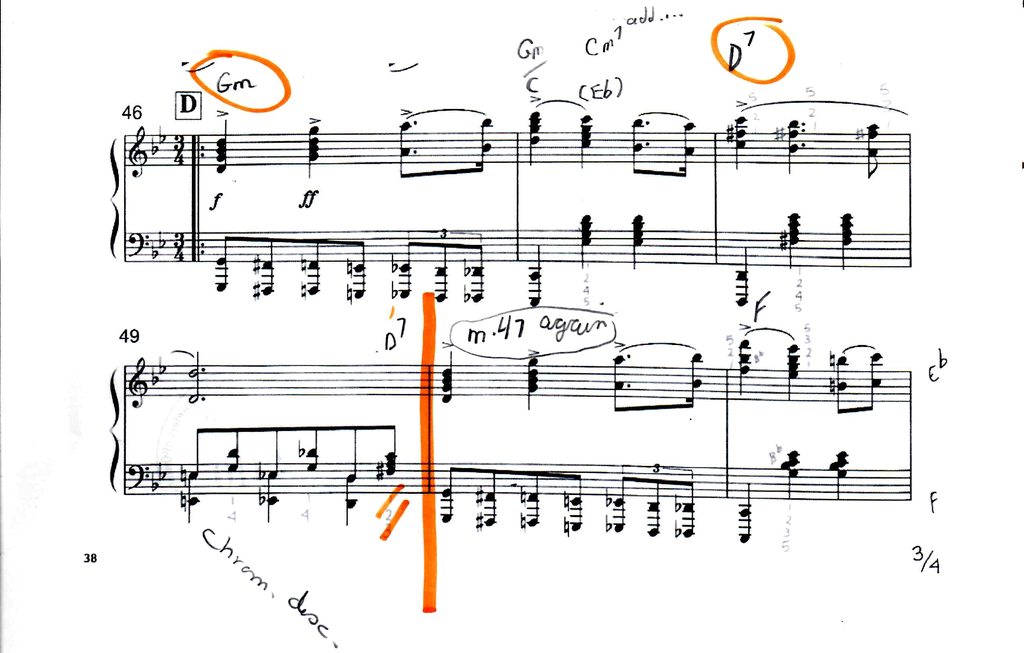
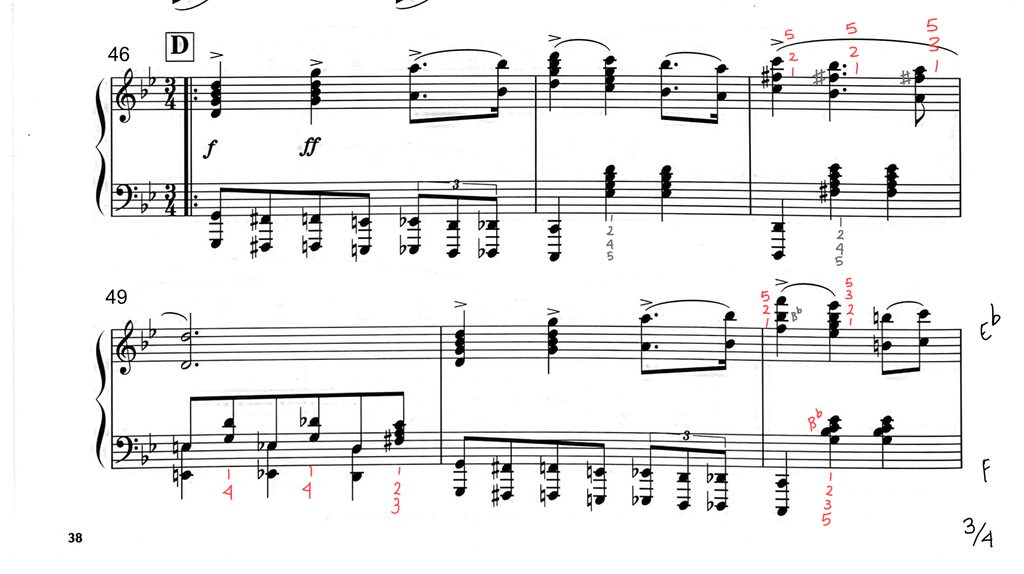
- in the experiment I shared yesterday as an mp3, I first examined the score, and determined some main chord in the RH - Gm and D7. I played a simple version of the RH, leaving out other parts. i.e. I played as much as I could handle without making mistakes. My brain and nervous system could not handle more than this much.
- no attempt at dynamics, expressiveness, and below tempo (so yes, some degree of slow practice) - accuracy of timing was also on the back burner while building this stage.
- checking back while building this, to make sure I wasn't memorizing notes that weren't there.
- taking breaks between sessions & layers, in the Molly-sense of breathers
- always mindful and present, rather than letting the hands do their thing, at this early stage. If D7b9 is being played, mindful that it is being played. When in the later run-through I name some things like "chromatic bit" that wasn't in order to demonstrate; it was part of the process
- In the final playthrough HT of day 1, 2nd time at the piano - there are pauses. It's better to pause, gather yourself, know what you'll be playing next before playing it - than to aim for perfect timing with no breaks and then fudge it. You're building memory.
The little polyrhythm bit, I did aim for timing from the get-go because that's a weak area for me and I counted it while practising.
At another time, if I were building this piece, I might practise using "short quick bursts". (I've heard it performed at tempo now). Each burst would have to be correct, and might be very short. They'd come after having a solid handle of the notes. These are things I'm finding for me. They're not meant as advice for anyone.
On slow practice: When that is taught and nothing else attached to it, as if going slowly is a holy grail, I think it can be ineffective. If you only focus on going slowly, and you're bored out of your skull and your mind wanders, that might be counterproductive. If there are things you need to focus on, and you need enough time to be able to do so, then that dovetails with slow practice.