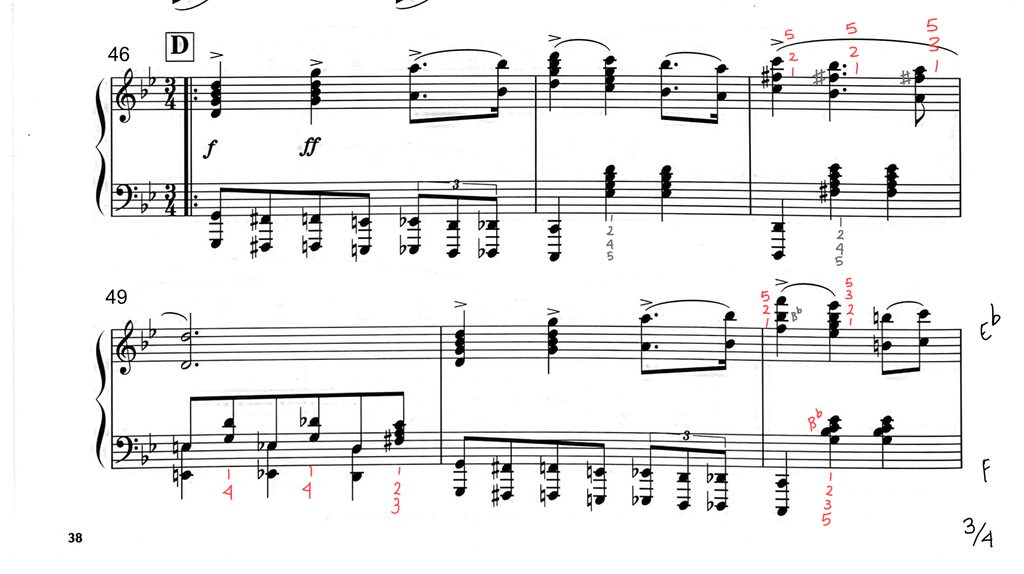
Stub Well, we have different definitions of what constitutes error-free, which is fine. Picking one thing (notes/chords, for example, while ignoring timing/rhythm), then yes, error-free is possible and you did what you set out to do. For me, notes and timing/rhythm are the one thing usually set in stone in a score and it is my belief that most people do not get those correct every time from the very start of learning a piece.
We'd need to discuss the process of practising and preparing a piece, as opposed to the final form of the piece - the thing we are aiming for at the end of that process, and what will be the performed piece. People have and are taught different methodologies. I record a lot of the stages because I work with a teacher in another country, and you'd hear both. There is method behind those stages.
In this case I aimed to memorize the notes of that section and did so in one day in two sessions. I "have" the notes and they are correct. Were I preparing this piece, the next day I'd join together the timing of the pauses between sections. In a subsequent time, I'd work on dynamics, interpretation, and a faster tempo. The end result would be correct, as intended, and musical. This is how I learned to work, and it has served me. Memorizing isn't a thing I usually do. This required an extra stage of making sure one has the right notes in the first place.
There are other methodologies. For example, broken chords may be played as block chords so as to get the harmonies - and then as block chords. I've heard of playing a passage in different rhythms to get control in the hands, and then the correct rhythm, now with the good control. Neither the block chord stage, nor the rhythm stage, are "errors". They are building blocks toward the final result you want. It is controlled, deliberate, with purpose.
Does any of that make sense or are any of these things familiar?